NetZeroCities, Led by Climate KIC: Porto’s Civic Spirit Sparks a New Eco-Urban Identity
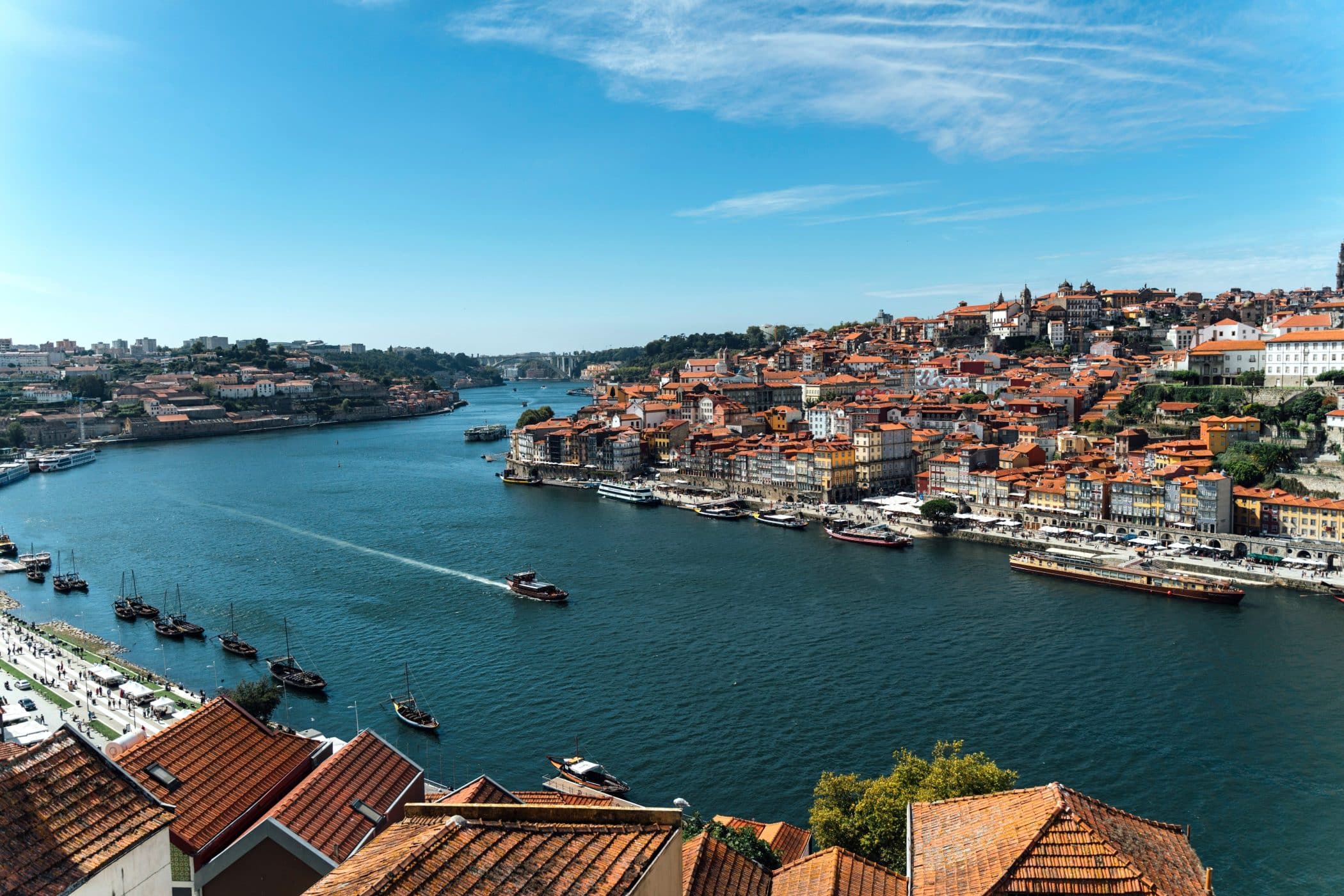
Porto’s ambitious pledge to reach climate neutrality by 2030 is on the cusp of a citywide effort.
Porto is a city where the past gives depth to the present, and where innovation is not a break with history, but a continuation of a long-standing ability to adapt, reinvent, and move forward. That’s why we’re addressing one of the most critical challenges in the climate transition: enabling and sustaining behavioural change at the citizen level in a way that is measurable, rewarding, and directly connected to city-wide climate objectives.
Catarina Araújo, Vice Mayor and City Councillor for Porto’s Urban Planning, Public Space, Environment and Sustainability
With the NetZeroCities Pilot Cities Programme, led by Climate KIC, offering a ripe opportunity to translate this enduring determination into a model that puts citizens at the heart of urban climate action, Porto is rolling out the mobile application, “WAKE UP! – Wider Approach to Keep Engaged citizens on sustainable Urban Policies”. As the first citizen climate app of its kind, WAKE UP! helps residents understand the impact of their everyday choices, connecting individual actions to real change at home and across the city.
Why Citizens are Key to Change
Porto’s Climate Pact, launched in 2022, offers a strategic backbone to ignite this shift. Beyond its robust policy framework, it serves as a platform to mobilise and empower residents to actively contribute. As their strategy evolved, it became increasingly clear that achieving climate neutrality by 2030 would only be possible if citizens were fully and meaningfully involved in the transition, Araújo explained. This vision takes shape through the Pact’s power of partnerships, where public institutions, private companies, civil society organisations, and citizens work as a united front to accelerate the city’s climate transition. She added that nearly 300 organisations and more than 2 000 citizens are formally committed to this shared objective, united by a willingness to co-create and experiment together, a mindset central to cultivating a greener lifestyle.
Reimagining the Urban Citizen – a Digital Portrait of Climate Impact
As a labelled city in the European Union’s Climate Neutral and Smart Cities Mission and Pilot City, Porto is testing how digital tools can help people see the impact of their everyday routines to inspire lasting behavioural change. With Porto’s over 230 000 residents as the starting point, the city turned to Cartão Porto, the trusted Porto Citizen Card: a key to the city already in people’s pockets. It offers perks like free public transport trips, discounts at cultural venues and sports facilities, and access to municipal services, like libraries.
Araújo explained that the Porto Card today has more than 100 000 subscribers and that this existing infrastructure allowed the city to envision an additional, innovative layer of engagement: a personalised, data-informed relationship that helps citizens better understand the impact of their daily consumption choices.
Building on that foundation, Porto assembled a dynamic municipal consortium, the Municipality of Porto, Porto Ambiente, Porto Digital, the Porto Energy Agency, Águas e Energia do Porto and CEiiA, to sketch a digital blueprint of urban consumption on WAKE UP!, enabling opted-in users to trace usage patterns across water, energy, waste, mobility and consumption habits in one place.
Together, we identified the potential to combine existing data streams with citizen-centred digital tools, creating a solution that empowers individuals with clear, actionable insights into their personal carbon footprint and encourages behavioural change aligned with the city’s climate objectives.
Catarina Araújo, Vice Mayor and City Councillor for Porto’s Urban Planning, Public Space, Environment and Sustainability
WAKE UP! is a digital platform that combines smart meter data and citizen inputs to show users their water, energy, transport and waste habits in a personalised dashboard. It compares current and past consumption, places individual behaviour in the context of citywide sustainability trends, and highlights low-carbon actions. By making impacts visible and comparable, it encourages reflection, peer exchange, and everyday behavioural change. A news feed supports ongoing learning with updates, tips and local climate initiatives. Overall, the app links personal choices to the city’s net-zero goals, turning climate action into a shared and participatory process.
For Greener Efforts, Citizens Reap Rewards
Rather than presenting users with raw numbers and hoping for motivation, WAKE UP! translates individual actions into measurable, easy-to-grasp impacts, and it rewards sustainable choices, giving them tangible value. By using gamified features to keep users active, data streams on waste, transport, water and energy consumption score citizens’ carbon footprint. The emissions avoided are then converted into points.
Araújo explained that these points can be exchanged for rewards and stressed that the reward system is not seen merely as an incentive mechanism, but as a way to connect climate-friendly behaviour with broader city life, such as participation in cultural, sports, or sustainability-related activities. As a result, she added, rewards connect personal actions, community involvement, and the city’s climate goals in ways that reinforce each other. She noted that the city is now considering whether individual incentives are sufficient to sustain long-term engagement or whether community-based rewards and collective challenges can play a stronger role in fostering a sense of shared ownership and city-wide transformation, using this pilot as a testing ground for different incentive and compensation models.
Co-created and Innovated: a Living Lab for Scale
WAKE UP! came to life through a rich ecosystem of collaboration, ensuring it was co-created at every stage. Urban management, infrastructure, and waste services work hand-in-hand with education, social services, sports and youth organisations, innovation and living labs, and importantly, citizens.
One of the most important lessons we have learned so far is the value and necessity of genuinely involving both citizens and organisations in the co-creation and co-development of climate-related tools and policies.
Catarina Araújo, Vice Mayor and City Councillor for Porto’s Urban Planning, Public Space, Environment and Sustainability
Araújo highlighted that citizen involvement, initially seen as a complexity, became a key strength of the project, as it improves feedback, shapes priorities and builds trust. This trust is seen as essential to engaging users and ensuring confidence in the city’s climate goals, while organisations involved are increasingly committing to long-term climate action beyond the pilot phase.
She also emphasised the importance of experimentation, noting that NetZeroCities provides a safe space to test and scale innovative solutions. WAKE UP! is presented not just as a local tool but as a learning framework, with Porto sharing and gaining insights through a wider network of cities working together toward climate neutrality.


 Share this page


