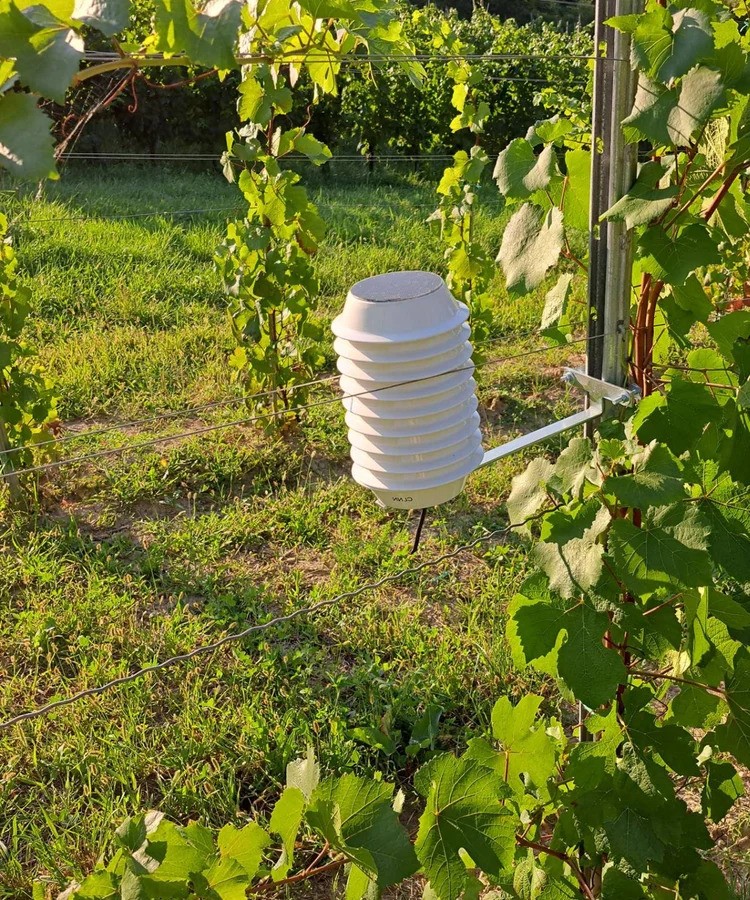
Atfield Technologies, through its WineSense platform, is helping winegrowers use real-time data to manage vineyard risks, improve resource efficiency and build resilience to changing growing conditions.
Every day, winegrowers make decisions that affect vine health, grape quality and business performance. Yet many of these decisions still rely on manual inspections and incomplete information.
Atfield Technologies is working to change this. Its WineSense platform combines sensor technology, weather intelligence and predictive analytics to help growers understand what is happening in their vineyards, identify risks earlier and make more informed decisions.
Tackling uncertainty in the vineyard
Viticulture has always involved uncertainty because grape production depends closely on environmental conditions. Droughts, heatwaves, frosts and intense rainfall can affect grapevine development, fruit quality and yield. They can also increase the risk of pests and diseases, making vineyard management more complex.
Precision viticulture offers ways to respond. Technologies including remote sensing, artificial intelligence and computer vision can support earlier detection of vine stress, disease and environmental risks, helping growers take more timely and targeted action.
Atfield Technologies aims to make these capabilities accessible to growers through WineSense. By combining vineyard monitoring with real-time insights and early warnings, the platform is designed to help growers manage risks while improving productivity and resource efficiency.
From a Serbian startup to an international agritech company
Atfield Technologies has expanded internationally as more winegrowers seek tools to manage changing and unpredictable vineyard conditions.
In 2026, the company supports more than 150 wineries across 10 countries: Serbia, Spain, Croatia, Romania, Slovenia, Montenegro, Bosnia and Herzegovina, Czechia, the United Kingdom and the United States.
Alongside its headquarters in Bečej and operations in Belgrade, Atfield established WineSense Atfield SL in Bilbao, Spain. The new company received €50 000 in initial funding and formed a strategic partnership with a local consultancy to support business development and access to Spanish and wider European markets.
The company has also continued developing its technology. In 2026, it completed development and testing of a new wireless soil-moisture sensor that works with its vineyard decision-support and advisory platform, with initial commercial deployments already under way.
Atfield has completed two regional service contracts and is exploring similar models in other regions. In Croatia, it has expanded its distribution network to three value-added resellers. Its customer base includes wine producers in Serbia, Montenegro and North Macedonia, while three universities use Atfield's hardware and software solutions in their work.
Delivering benefits for growers and the environment
Atfield reports that use of its technology has contributed to an average 30% reduction in chemical spraying over three years, with estimated savings of around €200 per hectare each year. The company also estimates that more efficient water management can save 1 000 litres of water per hectare annually.
According to Atfield, improved timing of vineyard operations can reduce monitoring efforts by 50%. Fewer field visits can also reduce fuel use, while the monitoring technology itself is solar powered.
For smaller winegrowers, these efficiencies have the potential to support both resilience and profitability. During one pilot deployment in the 2025 growing season, a Serbian wine producer reported a 40% increase in yield after using recommendations generated by the system to avoid disease-related losses.
How EIT Food helped accelerate growth
EIT Food has supported Atfield Technologies at several stages of its development, helping the company test its technology in real farming conditions, strengthen its commercial capabilities and build visibility within Europe's agrifood innovation ecosystem.
Through EIT Food's Test Farms programme, Atfield tested and validated its technology with growers in real vineyard environments. This enabled the company to gather direct feedback from end users and assess its microclimate and disease prediction models under different growing conditions.
Atfield also participated in Sales Booster, EIT Food's commercialisation programme for agrifood startups, and received recognition through the EIT Food Innovation Prize Awards, supporting the company's commercial development and visibility.
EIT Food Test Farms program helped us to validate the reliability and accuracy of our micro-climate and disease prediction models under the specific climatic conditions of Northern Spain, known for their unique humidity patterns and disease dynamics.
Srdjan Tadic, CTO at Atfield Technologies
Looking ahead
Atfield Technologies is continuing to develop its technology and expand internationally, with the aim of helping more winegrowers make timely, evidence-based decisions in increasingly unpredictable growing conditions.
Its journey also demonstrates the role that real-world testing and collaboration can play in bringing agricultural innovation closer to market. Test Farms forms part of EIT Food's wider work in resilient agriculture, supporting innovations that can help farmers respond to changing conditions and strengthen the resilience of Europe's food system.

 Share this page


