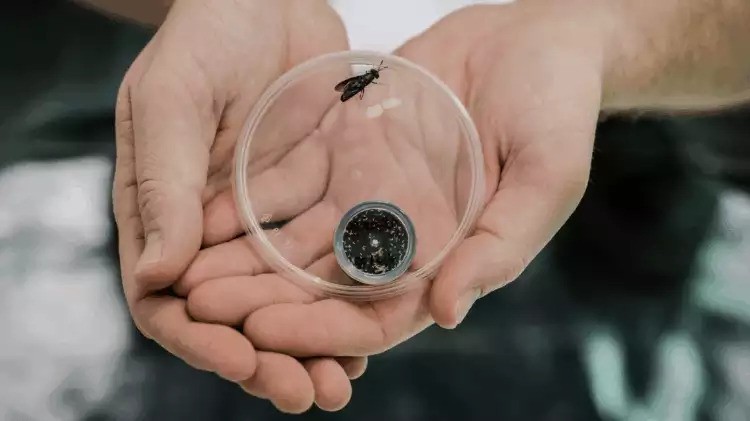
Beta Bugs is strengthening the foundations of the insect-protein sector by producing high-performing Black Soldier Fly breeds that help farms turn low-value sidestreams into reliable animal feed.
Their specialist genetics are supporting a fast-growing industry moving toward circular, localised protein supply.
Why bugs? Many people still ask that question when they hear about insect protein. Bugs sound like an unusual choice. It should not. Farmers across the world have used them for generations. Throughout history, insects have played a vital part in circular food systems.
Fixing the Genetics Gap
Farmers turn to Black Soldier Fly larvae because they convert low value sidestreams into high quality protein for pigs, poultry and fish. These sidestreams are the leftover organic materials that farms and food businesses cannot use elsewhere. Larvae can eat these materials and turn them into protein and oil, which farmers can use as fertiliser. This gives farmers a practical way to upcycle waste and reduce reliance on imported soy or fishmeal.
The problem is that most insect farms still work with unselected or inconsistent Black Soldier Fly stock. Poor genetics weaken growth rates, reduce resilience and limit feed conversion. That raises costs and makes large scale production difficult. To meet rising demand for sustainable feed, farmers need insect lines that grow predictably on varied sidestreams and deliver strong yields. This requires specialist breeding at scale.
From Grub to Greatness
Beta Bugs has grown into the UK’s first specialist insect-genetics company since being founded in 2017 at the Easter Bush Campus near Edinburgh. At the core of its progress is HiPer-Fly®, the company’s flagship Black Soldier Fly breed. HiPer-Fly® is produced through a structured breeding programme that selects for key traits such as development speed, larval mass and egg productivity while monitoring trade-offs. The result is a high-performing genetic line designed to give farms more consistent growth and higher yields than unselected stock.
The company operates a dedicated breeding centre that produces HiPer-Fly® eggs and larvae through The Multiplier™, its controlled multiplication facility. This system allows Beta Bugs to deliver standardised, high-quality genetics to insect farms across the UK and Europe, supporting producers that convert sidestreams into protein for aquaculture, poultry and pet food.
In 2023, Beta Bugs secured £1.72 million in investment to scale up production and strengthen its breeding and supply capacity. This was followed by an additional £2.1 million investment round in early 2025, confirming strong market confidence in the company’s genetics-focused model. At the time of the 2023 raise, Beta Bugs employed 20 staff, and has since expanded its team across technical, operations and commercial roles to 20 in order to support growing demand. Beta Bugs now supplies improved genetics to insect farms across the UK and Europe, supporting producers that convert sidestreams into protein for aquaculture, poultry and pet food. They’ve positioned themselves as a central player in the scale-up of insect protein and the wider shift toward resource-efficient feed, with plenty of scope for things to come.
When a Good Idea Met a Great Ecosystem
Beta Bugs joined the EIT Food Accelerator Network after being selected as part of the portfolio of agrifood startups working on sustainable protein solutions. Through the programme, the company received specialist mentoring, technical guidance and access to industry networks focused on scaling alternative protein production.
The accelerator also provided visibility across Europe’s innovation ecosystem, including editorial features and a filmed site visit to their breeding centre, which helped showcase the company’s genetics work to potential partners. Participation in EIT Food’s Alternative Proteins Challenge connected Beta Bugs with researchers, investors and commercial players working on next-generation feed solutions, supporting the company’s plans to expand the use of improved insect genetics within commercial farms.
Using insights and learnings from the EIT Food Accelerator Network, Beta Bugs was able to focus on its commercial and strategic goals and position itself for manufacturing and distribution. In parallel, being part of EIT Food has enabled Beta Bugs to further raise its profile within the agrifood and agritech sectors.
Thomas Farrugia, CEO of Beta Bugs
Scaling Up Without Bugging Out
European demand for insect meal is projected to rise from about 6 000 tonnes in 2018 to between 1.2 and 3 million tonnes by 2030, a scale that will require reliable genetics and large, consistent supply chains to meet commercial feed demand. This market growth signals a clear opportunity for improved Black Soldier Fly lines that can deliver predictable yields and support farms processing greater volumes of sidestreams into protein.
For Beta Bugs to deepen its impact, expansion of breeding capacity and continued R&D investment will be essential. The company’s recent funding rounds have strengthened its ability to supply genetics at scale, but broader adoption across the UK and Europe will depend on stable commercial partnerships, regulatory clarity on insect-protein use in feed and continued availability of suitable sidestreams for larvae growth. Collaboration with waste processors, feed manufacturers and large protein buyers will also be important to ensure that improved genetics translate into measurable gains for farmers and the wider circular economy.


 Share this page


