EIT Culture & Creativity North Regional Hub Open Day
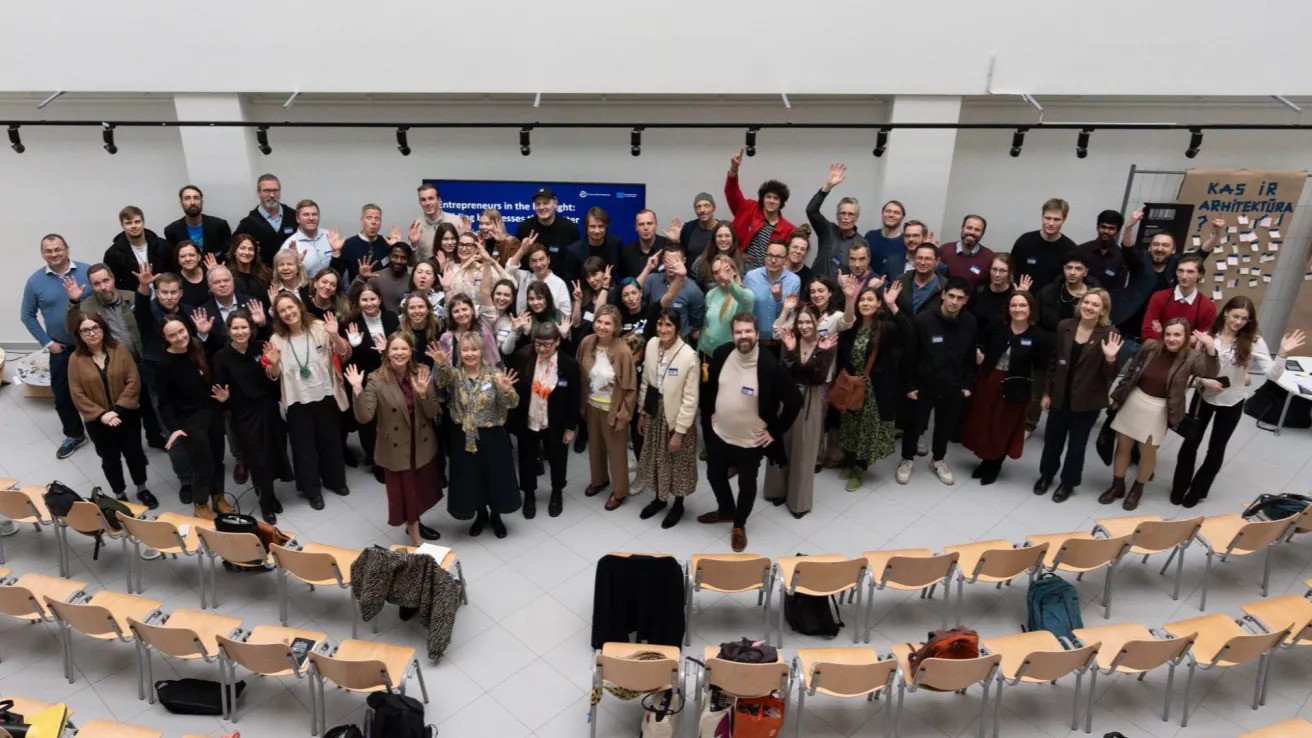
The EIT Culture & Creativity Regional Hub North Open Day brought together innovators, policymakers and investors to explore how creative ideas can evolve into sustainable businesses.
Taking place at Riga Technical University, the Regional Hub North Open Day brought together around 90 people from the Baltics, Poland and the Nordics, in collaboration with RTU Science and Innovation Centre, EIT Community Hub Latvia, Creativity Lab Latvia, and the Ministry of Culture of the Republic of Latvia.
Across 18–19 March, participants exchanged ideas, connected, and learned how to build viable businesses in Europe's Cultural and Creative Sectors and Industries (CCSI). A theme that became clear is that creative businesses require time, iteration, market know-how, and resilience to make an impact. An economically viable model is essential, one that can serve audiences and clients, while navigating changes and competition in the market, while generating real value to society.
This was the first in a series of Open Days happening across EIT Culture & Creativity's six Regional Hubs throughout 2026, each designed to spark connections and collaborations within local ecosystems across Europe. By their nature, creative industry ideas are typically innovative and may struggle to find their niche in the market. Open Day events can help by providing valuable knowledge and forging regional connections.
Unlocking Potential in Latvia and Beyond
Baiba Murniece, the Deputy State Secretary from the Ministry of Culture, emphasised the role of culture in building connections between people and innovations. She noted that Latvia has strong ideas and talents, as well as increasing visibility in CCSI, and called on the audience to build on this momentum.
But there are also external challenges to navigate. Creative industries often work within lifestyle sectors such as fashion, entertainment films, games, museums, as well as architecture and the built environment. As a result, they are easily exposed to shifting user behaviours and global trends, which can disrupt existing business models.
The nature of CCSI also makes it challenging to predict the success of individual innovative ideas. This uncertainty can also make it hard to secure financial and external support. As such, professional insights, success stories, and perseverance are essential for creative founders and startups.
Stories from Latvia’s Creative Frontline
Several local businesses were showcased at the event. Martins Upitis from the team behind the Oscar-winning animated feature film Flow shared the company’s story and invited participants to their studio in Riga’s city centre. Their growth has been driven by the unique artistic vision of the director Gints Zilbalodis, combined with the strategic decision to produce their movies in Europe.
Also at the event, Azeron presented its ergonomic keypads for gamers. Its Ecommerce & Partnerships Manager Martins Muitenieks described the process of developing a new device for a highly competitive video game hardware market, while operating from Ventspils, a small town on the Latvian coast.
The founders panel, moderated by CCSI business expert Liva Sturmane, explored how companies can be developed sustainably. Panellists Egils Grasmanis (Brain Games), Diana Novikova (Out of Box Films), and Didzis Dubovskis (Gamechanger Audio) highlighted the need for more support in skills development and funding for research & development, both of which are crucial for innovation in the creative sectors.
Showcasing Innovation and Building Partnerships
The latter part of the day featured pitches from the EIT Culture & Creativity portfolio companies. Among those taking the stage were FrameRate, VReal and UTRY who all presented their polished business ideas, developed with support from EIT Culture and Creativity business creation programmes. We also heard from beneficiaries of our education programme, including insights into the CPD course on resilient entrepreneurship in the creative economy from Alex Felman.
In addition, four partner universities, Tartu and its Viljandi Cultural Academy, Uppsala, Aarhus and Aalto, presented projects in the creative industry ecosystem. They shared their plans for business development, and their ambitions for new collaborations.
Open Days: Bringing Regional Innovators Together
EIT Culture & Creativity Open Days aim to share insights and opportunities, while strengthening the regional ecosystem by matching creatives with supporters. Each region hosts these events.
In the North Hub, the first event took place in Stockholm in June 2025, and will now shift between different locations within the region’s countries: Denmark, Estonia, Finland, Iceland, Latvia, Lithuania, Norway, Sweden, and parts of Northern Germany and Northern Poland, as well as the Faroe Islands.
The next Open Day North will take place in early October 2026 in Aarhus, Denmark.


 Share this page


