The German startup backed by EIT RawMaterials is bringing magnetic cooling technology to market.
For nearly 200 years, the world has cooled its food, medicines, and data centres using essentially the same method: compress gas, release it, repeat. It works. It's everywhere. And it's quietly warming the planet.
Refrigeration and air conditioning alone account for 10% of global energy-related CO₂ emissions. The refrigerants powering these systems have lurched from one environmental crisis to the next. Chlorofluorocarbons (CFCs) tore a hole in the ozone layer and were banned globally. Their replacements, hydrofluorocarbons (HFCs), turned out to be potent greenhouse gases now being phased out. And the next generation of alternatives, hydrofluoroolefins (HFOs), are classified as PFAS "forever chemicals" facing imminent EU restrictions. Natural options like propane and CO₂ exist, but come with serious tradeoffs: flammability, extreme pressure, and a need for highly skilled maintenance workers.
The industry has been searching for a fundamentally different path. A German startup, with support from EIT RawMaterials, may have found it.
A solid-state alternative
Magnotherm, a Darmstadt-based German startup supported by EIT RawMaterials, is poised to change this. The startup has developed a refrigerant-free cooling technology based on the magnetocaloric effect, a phenomenon in which certain metal alloys heat up when exposed to a magnetic field and cool down when that field is removed. This solid-state cooling system has the potential to significantly reduce emissions and energy use.
At the core of Magnotherm’s technology is the magnetocaloric material LaFeSi (lanthanum-iron-silicon). Another key component is the neodymium iron boron magnet used to generate the magnetic field. Crucially, it contains no heavy rare earth elements, making it less exposed to China’s recent export restrictions.
Tapping into Europe’s largest rare earths network
Turning a lab phenomenon into a commercial product requires more than scientific ingenuity. It requires capital, credibility, and connections. That's where EIT RawMaterials stepped in.
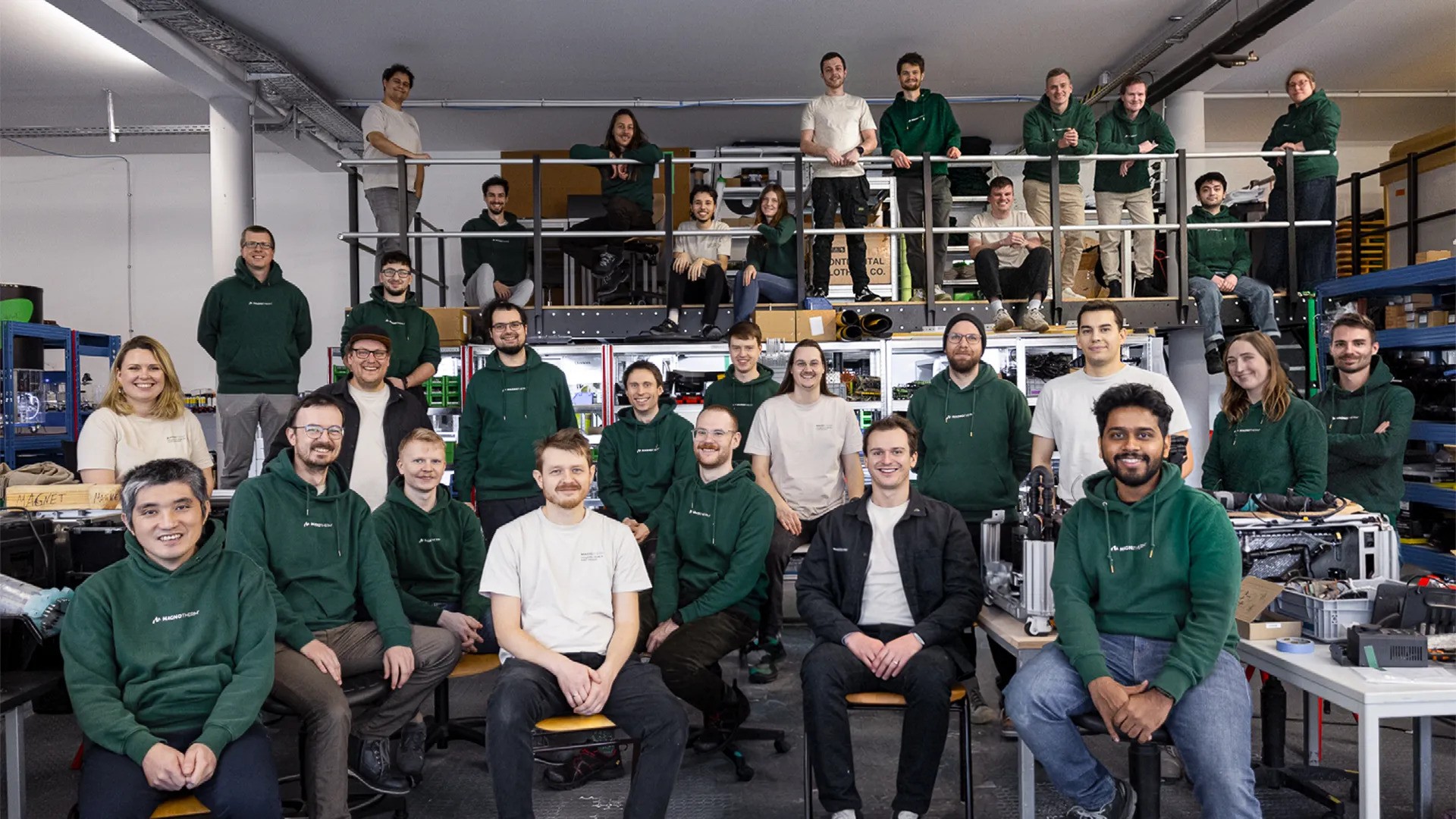
The startup grew out of research at the Technical University of Darmstadt in 2019. Since then, the team has grown to around 30 people and raised a seed round of €6.8 million. Through two EIT RawMaterials programmes, a Booster Call and a KAVA Scaling Call, the startup has received an additional €3.8 million in grant funding and investment to accelerate the development and upscaling of its magnetocaloric material.
EIT RawMaterials has the deepest network of rare earths in Europe. It’s where all the people dealing with rare earth elements and rare earth permanent magnets actually gather and align.
Maximilian Fries, COO and Co-Founder of Magnotherm
While several companies have attempted to commercialise magnetic cooling, Magnotherm is the only one to have brought a certified product to market, a deliberate move to demonstrate that the technology works and build trust in an established market unfamiliar with the innovation.
Its first unit, Polaris, is the world's first fully certified beverage cooler based on magnetic cooling technology. First delivered to Coca-Cola in early 2023, Magnotherm has since sold 50 units to customers around the world. Its second generation, Eclipse, increases the cooling capacity up to one kilowatt. Earlier this year, Magnotherm signed a pilot with REWE, one of Germany's largest supermarket chains, to deploy Eclipse units in up to ten stores. REWE tested the Eclipse in the pilot and confirmed it used 15% less energy than comparable propane refrigeration units, while maintaining a target temperature of 4–5°C.
Looking ahead, the startup is working to lower costs and secure manufacturing partners to bring magnetic cooling to the mass market. It is also developing higher cooling capacities and exploring applications beyond retail, such as industrial process cooling, data centres, and HVAC.


 Share this page


