EIT launches call worth €40 million to strengthen deep-tech and manufacturing innovation in higher education
 EIT
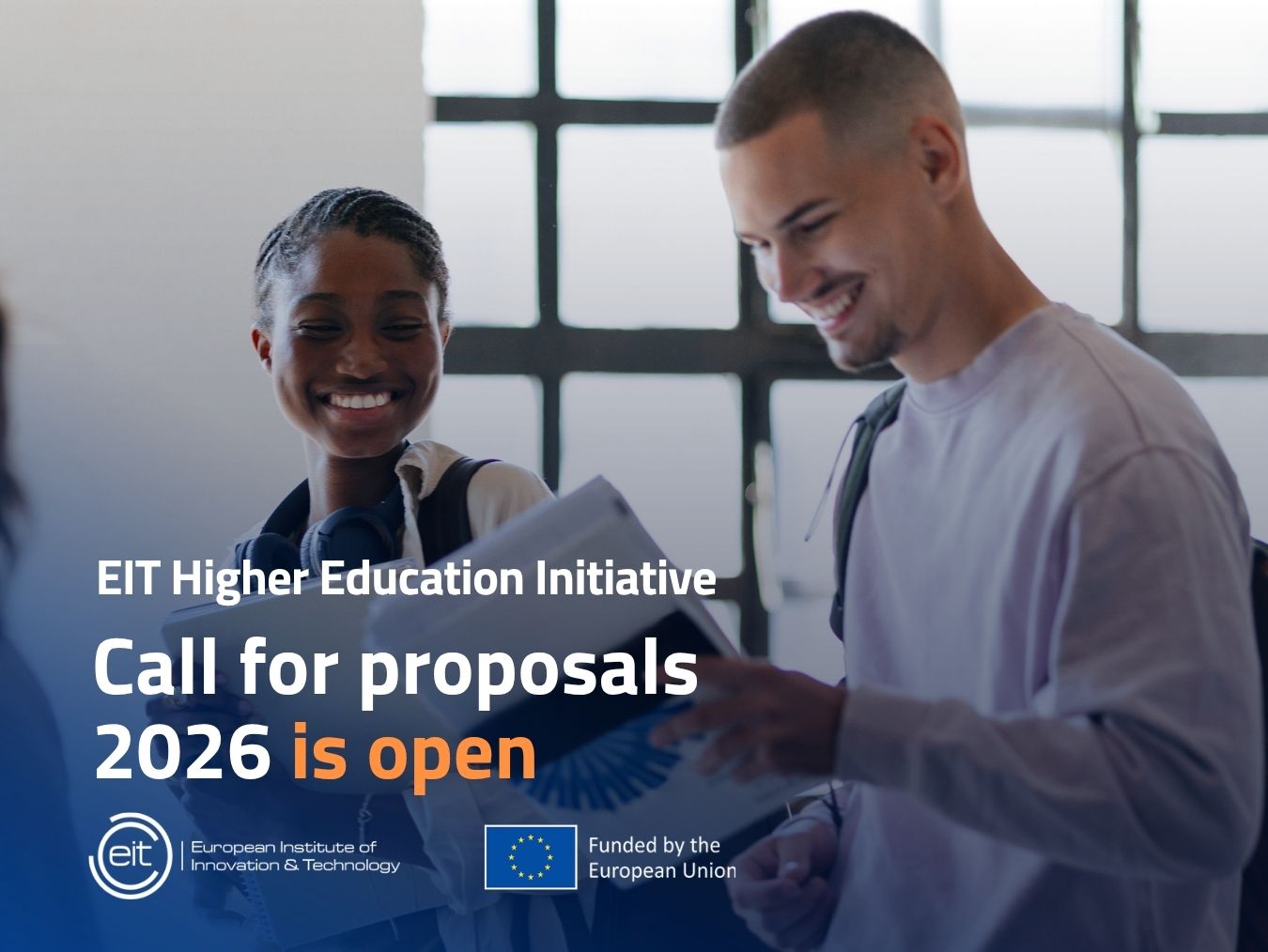
The European Institute of Innovation and Technology (EIT) has launched a new call to strengthen the capacity of higher education institutions to turn their research into innovations in manufacturing and deep tech.
Launched under the EIT Higher Education Initiative, the call aims to help universities develop innovation and entrepreneurship skills, improve technology transfer services and build stronger links with businesses.
With a budget of €40 million from the EIT, the 2026 Call for proposals will provide up to €1.25 million per selected project over 18 months. The EIT Higher Education Initiative invites consortia of higher education institutions, businesses, research organisations, public bodies and other innovation partners to apply. The call is aligned with EU initiatives, such as the Union of Skills, the STEM Education Strategic Plan, the Competitiveness Compass and the Clean Industrial Deal.
Selected projects will strengthen the capacity of higher education institutions by developing innovation, entrepreneurship and intellectual property skills among students and staff across science, technology, engineering and mathematics (STEM) and related fields most relevant to manufacturing and deep tech innovation. They will also improve knowledge sharing, technology transfer and intellectual property management, while building stronger links with industry partners, investors and innovation networks. These links will be supported by the EIT Knowledge and Innovation Communities (KICs).
Turning a research breakthrough into a successful business takes skills, confidence and targeted support. This call will help students, researchers, and university staff to take that step. By bringing new technologies from the lab to the market with a focus on advanced manufacturing and deep tech, we support higher education institutions to play a stronger role in Europe’s innovation future and competitiveness.
Martin Kern, Director of the EIT
The EIT HEI Initiative has connected partners and projects at a deeper level through in-person meetings and trainings – something you don’t always get from EU funding. The initiative has created a real community of practitioners, educators and experts and empowered them to create more opportunities to support our students, staff and ecosystems to develop and grow.
Natalie Walsh, Project Coordinator, Idea to Impact (i2i), a beneficiary of a previous call
Eligibility and consortium requirements
Who can apply?
To be eligible, consortia must meet the following requirements:
- Consortium composition: Each consortium must include at least five funded partners: at least three HEIs (from three different Horizon Europe-eligible countries, including at least one EU Member State) and at least two business/industry partners and/or business/industry representative organisations (e.g. SMEs, startups, larger enterprises and industry associations). Industry partners operating in manufacturing or deep-tech technologies are strongly encouraged to join a consortium.
- Eligibility: Organisations funded under the EIT Higher Education Initiative Call 2025 are not eligible to apply under the 2026 call. Each organisation may participate as a funded beneficiary in only one 2026 call application.
How to apply
Consortia of higher education institutions, businesses, research organisations, public bodies and other non-academic partners can prepare their applications by consulting the full call text and finding potential partners through the matchmaking platform.
Consortia have until 13 January 2027 at 17:00 CET to submit their applications. Selected projects will be announced later in 2027.
About the Higher Education Initiative
The EIT Higher Education Initiative, coordinated by EIT RawMaterials, supports innovation and entrepreneurship in higher education by strengthening links between universities and industry. Since its launch in 2021, it has supported more than 500 higher education institutions and trained over 150 000 students and staff in innovation and entrepreneurship. It has also helped launch more than 207 startups.

 Share this page


