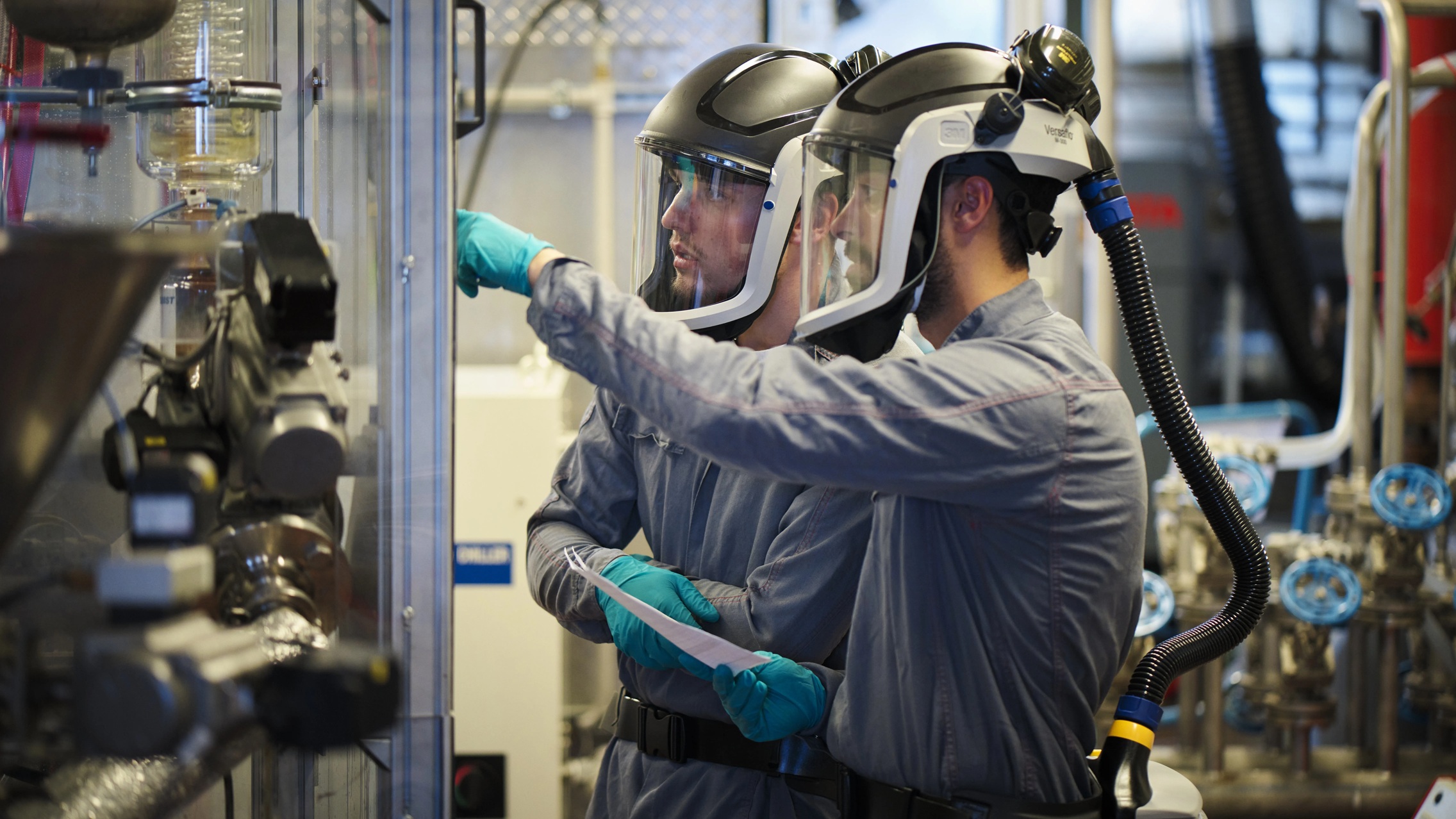
The EIT RawMaterials-supported SCIONb project has developed next-generation battery materials, earning its lead partner, PCC Thorion, a nomination for the EIT Innovation Team Award.
Europe’s growing battery industry needs high-performance materials and more resilient, sustainable supply chains. Graphite is widely used in lithium-ion batteries, but Europe relies heavily on imports of this material.
Supported by EIT RawMaterials through a Knowledge and Innovation Activities (KAVA) call, the SCIONb project brought together PCC Thorion, Fraunhofer ISE, the University of Duisburg-Essen and the University of Freiburg to address this challenge. Each partner contributed specialist knowledge and expertise in battery materials and technology.
Together, they developed and scaled up a silicon-carbon composite anode material and complementary electrolyte additives – technologies designed to store more energy using less material and improve battery performance.
Collaboration at the heart of innovation
The SCIONb project built on existing research and expertise across the four organisations, bringing their capabilities together in one team. The challenge was to turn this combined knowledge into technology that could work at industrial scale, not just in the laboratory.
By sharing knowledge, expertise and equipment, the partners were able to tackle challenges together. This collaboration became particularly important when several early production approaches failed to perform as expected during scale-up and had to be abandoned. The partners then tested various approaches using different raw materials and variations in production processes.
The results gave the team confidence in both the material and the production process, which was flexible enough to work with different raw materials.
Better batteries with less material
One of SCIONb’s key developments was its silicon-carbon composite anode material. Silicon can store more energy than graphite, but it can degrade during charging. SCIONb’s approach combines silicon with carbon, alongside specially developed electrolyte additives designed to improve stability and battery lifespan.
According to Enrico Roicke, Managing Director of PCC Thorion, one kilogram of the team’s silicon-carbon composite could replace around four to five kilograms of graphite. The team also estimates that the material could have an 80–90% lower carbon footprint than graphite, due to both the smaller quantity of material required and the raw materials used.
How EIT RawMaterials supported commercialisation
Battery materials were a new business area for PCC when SCIONb began, but the EIT RawMaterials project framework helped the company combine its industrial perspective with specialist battery research from the outset. According to Roicke, this collaboration provided access to expertise that helped the team scale up the technology. EIT RawMaterials also supported the project by enabling it to extend its initial work to scale up the complementary electrolyte additives.
One of the strengths of the EIT RawMaterials approach is that it isn’t simply about funding R&D and then putting the results in a box. There was a clear focus on commercialisation from the beginning.
Enrico Roicke, Managing Director of PCC Thorion
That focus has helped the team move beyond technical development and build connections across Europe’s battery industry as it works towards bringing the technology closer to market.
Progress towards commercialisation
PCC Thorion has since taken further steps towards commercialisation. In May 2026, the company signed a further letter of intent with German battery manufacturer UniverCell concerning the potential supply of its silicon-carbon composite, Sithorit AX. According to PCC Thorion, initial material samples had been successfully validated, with further qualification testing under way to assess the feasibility of future commercial supply.
In July 2026, PCC Thorion also signed a joint development agreement with E-Lyte Innovations to further develop, validate and commercialise its SCIONb electrolyte additives. The partnership involves developing customised electrolyte formulations and testing them in battery cells, with the aim of supporting industrial scale-up and future commercial applications.
PCC Thorion nominated for the EIT Innovation Team Award
For PCC Thorion's Managing Director, the EIT Innovation Team Award nomination is an opportunity to recognise the people behind the technology.
A lot of development work happens out of sight, in laboratories and industrial facilities, and it’s never a one-person job. There are many people behind a new technology who are rarely seen – but one of the things that motivates us is knowing that one day you might drive an electric car containing a material you helped develop, and because of that work, it has more range or charges faster. This nomination is a chance to recognise that whole team and make their work visible.
Enrico Roicke, Managing Director of PCC Thorion,
The winners of the 2026 EIT Awards will be announced at a ceremony in Budapest on 2 December 2026. The awards recognise innovators and innovation teams such as PCC Thorion, whose work is helping to advance new technologies and strengthen Europe's innovation ecosystem.
 Share this page


