AMPLE: Driving Employment Opportunities In Agrifood
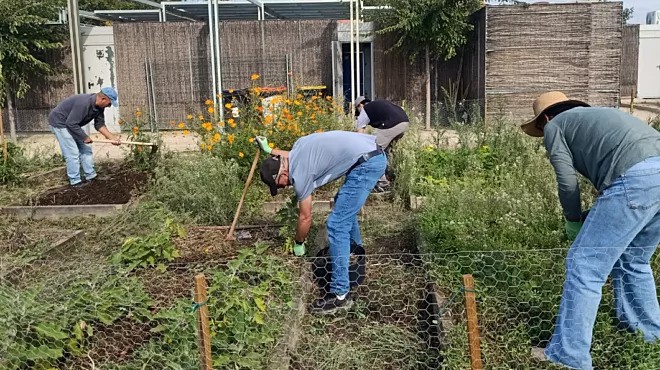
From Madrid to Warsaw, AMPLE project equipped people and agrifood businesses with the skills and support to grow, learn, and advance in the job market.
For many, choosing to eat healthily isn’t really a choice at all. Nutritious food can feel out of reach, whether because it’s too expensive, too scarce, or simply not available in their neighbourhood. Across Europe, millions face this reality every day, caught in a web of economic hardship and social marginalisation.
Addressing Inequality Through Employment
In 2024, about 8.5% of the EU population reported being unable to afford a complete meal (one including meat, fish or an equivalent) at least every second day, with people at risk of poverty nearly three times more likely (19.4%) to face this challenge than those not at risk of poverty, showing the strong link between economic insecurity and food access.
In this context, EIT Food created the AMPLE programme, which addresses food insecurity from a structural perspective by focusing on employability, skills development and access to sustainable job opportunities, recognising that stable and decent employment is a key lever to improve food access, social inclusion and long-term resilience.
AMPLE is like a steppingstone for the future and can help us access jobs that require basic cooking knowledge.
Naisha Michelle Palma Flores, AMPLE participant from Venezuela
Growing Skills, Jobs and Startups
In 2023, EIT Food was awarded $500 000 through the Citi Foundation’s inaugural Global Innovation Challenge to create the AMPLE programme, supporting efforts to improve food security across Europe.
Madrid (Spain) was the first city to implement AMPLE, followed by Warsaw (Poland). The programme has since expanded to several European cities, including Olsztyn (Poland), Lutsk (Ukraine), Skopje (North Macedonia), Split/Dalmatia (Croatia), and Velika Plana (Serbia).
The programme was developed with a focus on social innovation and entrepreneurship to improve the lives of people in vulnerable communities. Through a range of co-creation activities with different organisations, we were able to improve access to, and the affordability of, nutritious food.
AMPLE directly benefited 342 marginalised people of working age, mainly women, low-income individuals, people with disabilities and migrants. Through its employment and training activities, 97 participants obtained food handling certification, 38 achieved employment or improved their salary conditions, and 11 agrifood startups were created through mentoring services.
In addition, €2 500 “Boost vouchers” were awarded to 30 local businesses in Madrid and Warsaw, directly contributing to their growth and increased revenue.
When Collaboration Creates Impact
AMPLE has proved that collaborative action between public and private organisations can drive meaningful change. The programme equipped participants with agrifood skills such as entrepreneurship in the agrifood industry, cooking and urban farming, while promoting wellbeing and informed food choices, leading to healthier, more sustainable lifestyles. It also supported aspiring entrepreneurs, helping them develop and scale their ideas with the help of the micro-grants, “Boost vouchers.”
The socioeconomic impact is significant. According to EIT Food impact report about AMPLE, in Madrid and Warsaw, every 1 Euro invested generated 3.15 Euros in social value, with 38 participants moving into employment or higher-paying roles, and 10 new positions created that will endure beyond the funding period.
By removing barriers and promoting equal opportunities, AMPLE demonstrated how collective efforts can advance employment, social inclusion, and access to sustainable food systems.
I’ve had doors closed to me because my business idea wasn’t fully developed. This programme is helping me solidify it.
César Andrade, AMPLE Participant from Ecuador
A Coordinating Role Across Design, Delivery, and Impact
From programme design to results collection, EIT Food has acted as the coordinator of AMPLE, connecting NGOs, cooperatives, and organisations with individuals from vulnerable communities, and fostering a collaborative ecosystem through a shared platform.
EIT Food also offered a European innovation framework, aligning AMPLE with EU priorities on inclusion, skills development, and sustainable food systems, while leveraging its extensive ecosystem to link local initiatives with a broader network of agrifood experts, innovators, and institutions.
I feel privileged to have had the opportunity to lead the AMPLE Warsaw programme. What makes this experience truly meaningful is the chance to work with remarkable organisations and people. The impact goes beyond the skills gained; it is also about creating future opportunities, a sense of belonging, and inclusion in society and professional life. This value is immeasurable.
Antonina Kurmanowicz, Community Outreach Manager at EIT Food
Inclusion remains a lasting priority in Europe
The AMPLE model has already been expanded to launch activities in five additional cities: Olsztyn (Poland), Lutsk (Ukraine), Skopje (North Macedonia), Split/Dalmatia (Croatia), and Velika Plana (Serbia). Each initiative targets specific groups, including low-income individuals, people with disabilities, migrants, and other disadvantaged communities.
The main challenge remains securing initial and sustainable funding. Nevertheless, there is significant interest from many organisations in supporting social innovation projects aimed at promoting equal opportunities, improving food accessibility, and enhancing overall quality of life.


 Share this page


